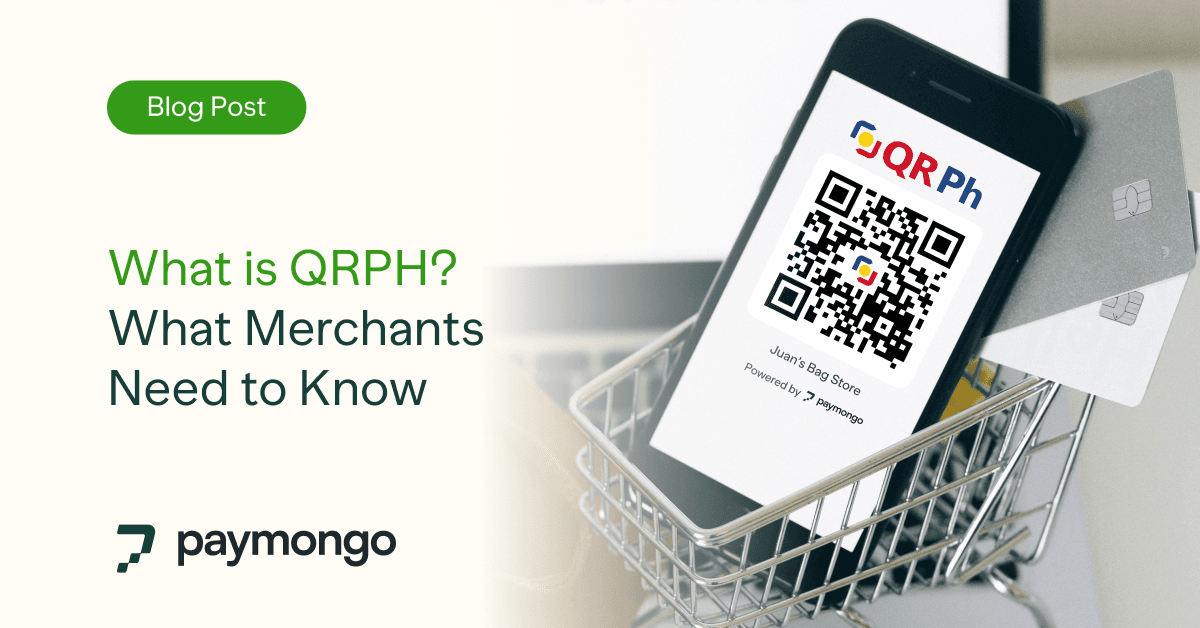
Before QR Ph existed, accepting cashless payments at a physical store meant juggling multiple QR codes – one for an e-wallet, maybe one for a bank. Customers would ask which e-wallet you used, and if they had a different one, the sale was dead. It was fragmented, confusing, and a barrier for small businesses trying to go cashless.
QR Ph was created to fix exactly that.
What Is QRPH?
QRPH (officially called QR Ph, or the National QR Code Standard) is the Philippines' unified QR payment standard, developed and mandated by the Bangko Sentral ng Pilipinas (BSP) under Circular 1055. It's built on the EMVCo QR code standard, the same global framework used across countries like Singapore (SGQR) and Thailand (PromptPay).
The idea is simple: instead of each bank or e-wallet having its own QR code format, QR Ph gives every merchant one QR code that any participating app can scan and pay through.
It works for two transaction types:
- P2M (Person-to-Merchant): A customer pays a business
- P2P (Person-to-Person): An individual sends money to another individual
For merchants, P2M is the relevant use case.
How Does QRPH Work?
The customer-facing flow is straightforward. BSP describes it as Look, Scan, Pay:
- Look: The customer sees the merchant's QR Ph code displayed (on a printed standee, screen, or receipt)
- Scan: They open any QR Ph-enabled app and scan the code – no special QR Ph scanner needed
- Pay: They confirm the payment amount and complete the transaction in seconds
On the backend, the transaction routes through InstaPay, the BSP's real-time fund transfer network. This means payments are settled in real time, 24/7, including weekends and holidays.
Merchants don't need separate agreements with each e-wallet like GCash and Maya, or each individual bank. One QR Ph code handles all of them.
What Works with QRPH?
QR Ph currently has 40+ participating financial institutions in the Philippines. The most widely used e-wallets, digital banks, and traditional banks are listed below.
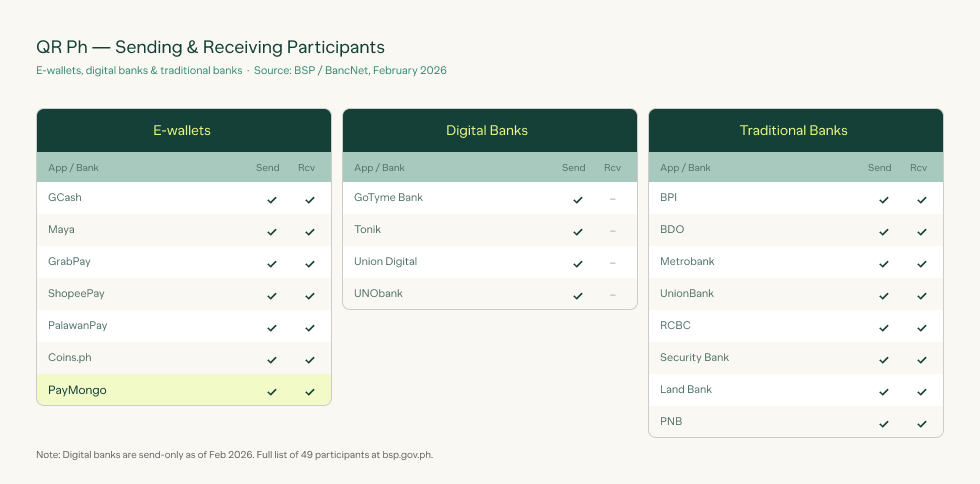
As a merchant, you don't need to set up separately with each of these providers. With a provider like PayMongo, you get one QR code that accepts payments from banks and wallets (with a rate of just 1.34% VAT-ex), plus all your collections land in a single dashboard.
Do You Need QRPH?
QR Ph is purpose-built for both in-person, face-to-face transactions and in-store use cases.
QR Ph is useful if you:
- You run a physical store, stall, kiosk
- You run an online store (e-commerce, social commerce, freelance services, in which it can be integrated to your checkout experience)
- You want to accept cashless payments without buying a POS terminal
- You serve customers across different e-wallets and banks
For chat orders, social media selling, and remote invoicing, a payment link is the more practical tool and customers can still choose to pay via QR Ph through it.
QRPH vs. Payment Link: What's the Difference?
Both let you accept payments from GCash, Maya, bank transfers, and more. The key difference is where and how the transaction happens.
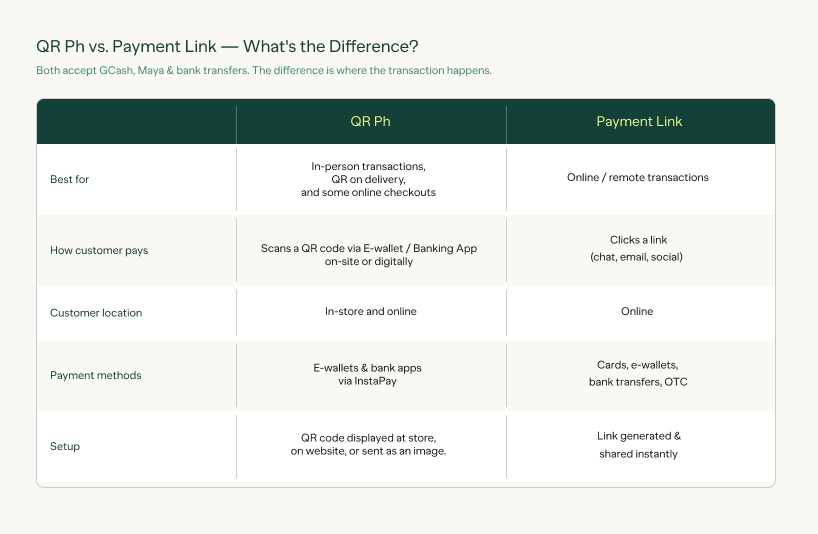
QR Ph covers your physical store and e-commerce checkouts. Payment links cover everything else — Facebook and Instagram orders, Viber inquiries, freelance invoices, remote clients. This is why it’s advisable for Philippine merchants to use both.
Generate your own Payment Link or QR Ph
Frequently Asked Questions
What is QR Ph used for?
QR Ph is used for cashless payments in the Philippines. Merchants display a single QR Ph code, and customers can pay using any participating bank app or e-wallet — including GCash, Maya, BPI, BDO, and more — by simply scanning the code.
Is QRPH the same as GCash QR?
No. GCash QR is specific to GCash users only. QR Ph is an interoperable national standard — one QR code that works across GCash, Maya, and 40+ other participating banks and e-wallets.
Is QR Ph free to use?
For customers, QR Ph payments are generally free. For merchants, fees may apply depending on the payment provider or platform you use to generate and receive QR Ph payments. More info on our pricing page.
Can I use QR Ph for online payments?
QR Ph is designed for both online checkouts and in-person, face-to-face transactions where a customer physically scans your code.
Is a restaurant table QR code the same as QR Ph?
No. A QR Ph code is a payment code; it opens your customer's bank or e-wallet app to pay you. A table QR code links to a digital menu so customers can order. They solve different problems, and many F&B merchants use both: Order and Pay for dine-in ordering, QR Ph at the counter for walk-up payments.