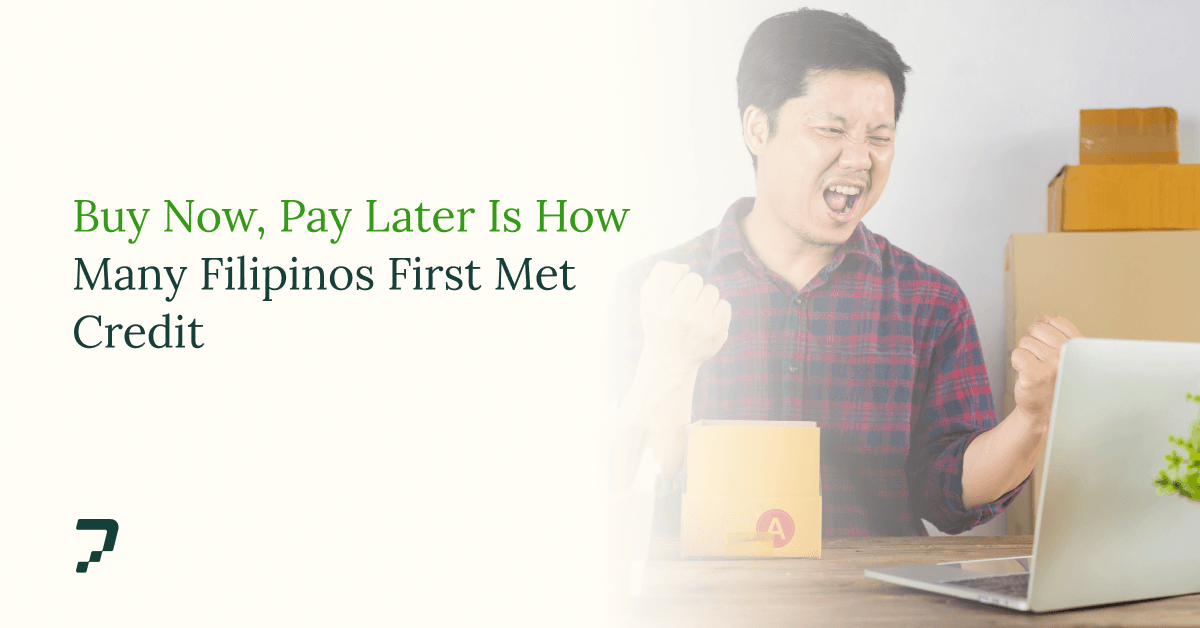
BillEase started offering installments on Lazada in 2017, back when most Filipino online shoppers were still paying cash to a courier at the door. Cashalo and TendoPay showed up the following year. None of it made much noise at the time. The product was mostly used by people buying phones who could not get a credit card, and the approval rates were low enough that plenty of applicants never got past the first screen.
What changed things was the pandemic, like many others. Millions of people who had never bought anything online suddenly had to, Shopee and Lazada put pay-later buttons right into their checkouts, and regional names like Atome and Grab PayLater came in behind them. By the end of 2024, UnaCash counted 28.4 million Filipinos who had used a BNPL service at least once, up 40 percent in a single year. Roughly one in four people in the country.
Why it took hold here is mostly a story about what was missing. Only about 15 percent of Filipino adults hold a credit card, per TransUnion, and that number was in single digits not long ago. The BSP's Financial Inclusion Survey found 44% of adults still had no account of any kind as of 2021, with lack of documents and lack of income the usual reasons given. So there was a large population that shopped on their phones, already used GCash or Maya to pay for things, and had no way to spread a purchase over a few months short of a pawnshop or a 5-6 lender.
In the US or Australia, BNPL had to win customers away from credit cards. Here, for most users, it was the first installment product anyone had ever approved them for. BillEase told TechCrunch in 2022 that about 80 percent of its customers had no credit record at all when they signed up.
How much of Philippine spending is BNPL, and how does that compare
It depends on whether you count pesos or people, and the two answers are quite different.
By value, BNPL is still a minority payment method. Cards, e-wallets, and cash on delivery carry most of Philippine e-commerce. GlobalData sized the country's online market at about 24 billion US dollars for 2024, and ResearchAndMarkets estimates Philippine BNPL payment volume at US$3.21 billion in 2025, while GlobalData puts the country's total e-commerce market at US$24.1 billion in 2024. The figures suggest BNPL represents a substantial share of digital commerce, although the datasets cover different years and methodologies and should not be treated as a precise market-share calculation.
For context, PCMI puts BNPL at about 5% of global e-commerce value and expects it to stay there through 2030. So even on the conservative reading, the Philippines is above the world average.
By reach, the gap is much wider. UnaCash's figures put the Philippines second in Southeast Asia for BNPL penetration at about 28% of the population, behind Singapore at 31% and ahead of Malaysia (22%), Thailand (19%), and Indonesia (18%). Singapore is a wealthy city-state with almost universal banking, so among large emerging markets the Philippines is at the top of the list. Across Southeast Asia, around 42% of online shoppers used BNPL in 2024. In the Philippines specifically, TransUnion's early-2024 survey found 82% of adults were aware of BNPL and 63% of those had used it in the prior twelve months, a figure that climbs to 68% among millennials.
That is the picture: a modest slice of total spending, but a user base that is broader, relative to population, than in almost any other country, including several that are far richer.
How BNPL is changing Filipino consumer behavior, and whether that is a good thing
Adoption figures only tell you that people signed up. What they did after that is harder to pin down, but there are a few shifts where the evidence is reasonably solid, and a few more where it is suggestive at best. It is worth being clear about which is which.
Bigger purchases are within reach
This is the best-documented change. Gadgets and electronics are the top BNPL category in every Philippine survey we could find, followed by appliances and furniture. These are items that cost a large fraction of a monthly salary, and the appeal of turning a ₱15,000 phone into five payments of 3,000 is obvious enough that it hardly needs explaining.
PayMongo's own transaction data points the same way. Across the platform so far this year, the average BNPL transaction has been nearly four times the size of the average transaction overall, and around 40% larger than the average card payment. People are using installments for the things they could not comfortably pay for in one go, which is what the product was designed for.
Whether that is good for the buyer depends on the purchase. A laptop for a child's schooling, or a refrigerator to replace one that has died, bought over four months at a disclosed fee, is a reasonable use of credit and a far better deal than the informal lenders most households would otherwise turn to. The concern, and it is a fair one, is the purchase that would not have happened at all without the button, and the buyer who has three of those running at the same time.
Credit is starting to feel ordinary
For most Filipino families, borrowing has meant a pawnshop, a salary loan, or a neighbor who lends at 20% a month, and it was something you did when something went wrong. BNPL has introduced a large group of people, many of them young, to credit that is planned rather than reactive: tied to a specific item, agreed at checkout, and paid off in a few weeks or months. In TransUnion's survey, the most common reason Gen Z respondents gave for trying BNPL was that it was easy to apply. Wanting to try it, and wanting to spread a payment out, came next.
That may sound like a small thing. In the Philippine context it is not. Most adults here have never had a formal lender assess them and say yes. For providers that report repayment activity to credit bureaus, a completed BNPL plan can also help establish a formal credit history. The BSP has spent years trying to bring the unbanked into the formal system; it is at least arguable that a pay-later option on a shopping app has done more to get young Filipinos onto a credit file than most of the deliberate efforts to do so.
Installment availability is becoming part of the buying decision
Here the evidence is thinner, and we should say so. There is no good published Philippine data yet on how often a shopper picks one store over another because it offers installments, or on whether BNPL is smoothing out the payday spikes that Philippine e-commerce has always lived with. What we do have is the logic and the anecdotes. Merchants who add installments generally report that customers ask for them, and with a quarter of the country now familiar with the option, it is plausible that its absence at checkout is starting to register as a reason to look elsewhere. We would treat that as a working hypothesis rather than a finding, and one worth testing on your own store.
Installments are moving into everyday spending
The early BNPL story was phones. The current one includes tuition, dental work, travel, and, increasingly, groceries and household basics. One recent analysis puts household essentials at roughly a fifth of BNPL spending and food at about 15 percent, though it does not cite a primary source for that split.
This is the shift with the most at stake. Bridging a tuition deadline or a hospital bill with a few installments is the kind of liquidity that middle- and lower-income Filipino households have never been able to get at a fair price, and it is hard to see that as anything but a gain. Covering the weekly grocery run the same way is a different matter. It usually means income is not keeping up with costs, and an installment plan defers that problem rather than solving it.
So has the shift been good for Filipinos? Mostly, with a real caveat. Tens of millions of people who were shut out of formal credit now have access to it, usually on better terms than the informal alternatives, and they are building credit histories in the process. That is a meaningful economic and social change. It holds up only as long as providers underwrite honestly, disclose fees and late charges in plain language, and the product stays a way to plan a purchase rather than a way to stretch a paycheck that already does not reach. Where those conditions are met, BNPL looks like one of the more inclusive developments in Filipino personal finance in years. Where they are not, it is the same old debt with a nicer app.
Where BNPL in the Philippines goes from here
The growth is likely to continue, but at a calmer pace. ResearchAndMarkets estimates Philippine BNPL payments grew about 24 percent a year between 2021 and 2024 and forecasts something closer to 11 percent a year through 2030, ending up around 5.4 billion dollars. That is roughly one in four people and the second-highest penetration rate in the world after Singapore.
Regulation is catching up, slowly. Providers that are banks or e-money issuers answer to the BSP; those set up as lending or financing companies answer to the SEC, which has been tightening rules on online lending platforms for several years. The direction of travel is toward clearer fee disclosure, mandatory credit bureau reporting, and eventually some form of affordability check, along the lines of what the UK and Australia have already introduced.
Not every provider will be built for that. The ones that come through will look more like regulated lenders than growth-stage apps, which is better for consumers and, in the long run, better for merchants who want an installment partner that is still around in three years.
And for merchants, installments are drifting from differentiator to expectation. In 2021, offering pay-later at checkout was a way to stand out. A few years from now, not offering it will probably be the thing that stands out. The practical question for a Philippine business is shifting from whether to add BNPL to how to add it without taking on another integration, another settlement schedule, and another line to reconcile.
That is roughly where PayMongo sits in all this. Merchants on PayMongo can switch on BillEase installments next to GCash, Maya, cards, and QR Ph in the same checkout or payment link, with everything settling into one account on one schedule. The customer gets the installment plan; the merchant gets paid in full and takes on none of the credit risk. If you want the mechanics of how that works and who pays what, we go through it in what BNPL is and how it works.
A quarter of the country has now used Buy Now, Pay Later. For a lot of them it was their first experience of formal credit, and how the next few years go, for the providers, the regulators, and the households paying in installments, will decide whether that turns out to have been a good introduction.
Frequently asked questions
How many Filipinos use buy now, pay later?
About 28.4 million Filipinos had used a BNPL service by the end of 2024, according to UnaCash. That is roughly one in four people and the second-highest penetration rate in the world after Singapore.
Why is BNPL so popular in the Philippines?
Because it filled a gap. Only around 15 percent of Filipino adults hold a credit card, so BNPL was the first installment option most consumers had ever been offered. Fast mobile approval, e-wallet familiarity, and the growth of Shopee and Lazada did the rest.
What share of payments in the Philippines is BNPL?
Rough estimates put BNPL somewhere around 8 to 9 percent of Philippine e-commerce value, against about 5 percent globally, though the figures come from different sources and should be read as approximate. By number of users, the Philippines ranks second in Southeast Asia.
Is BNPL regulated in the Philippines?
Yes. Providers that are banks or e-money issuers fall under the BSP, and those operating as lending or financing companies fall under the SEC. Both regulators have tightened disclosure and conduct rules for online lending in recent years.
Can a small business offer BNPL in the Philippines?
Yes. Payment gateways like PayMongo let merchants offer installment options such as BillEase at checkout alongside cards and e-wallets, with the merchant paid in full upfront and the provider carrying the credit risk.