Move Money Across Your Platform with Programmable Infrastructure
Accept payments, store balances, send transfers, and automate financial workflows through a unified infrastructure stack.
PayMongo is BSP-regulated, PCI-DSS Level 1 certified, and protected by enterprise-grade security — so your customers' payment information stays safe on every transaction.


Money movement shouldn't require multiple vendors
Managing financial flows across users and merchants is complex
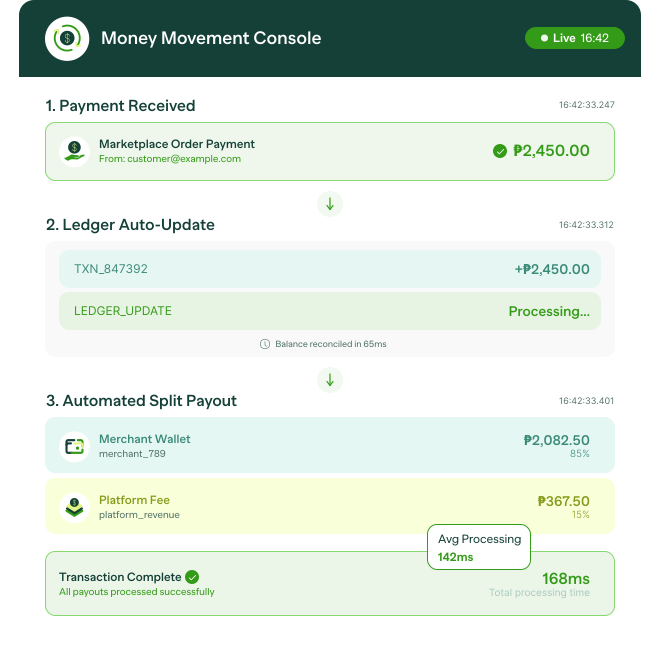
Platforms must combine wallets, ledgers, transfers, payment rails, and automation tools to manage financial flows. Without unified infrastructure, money movement becomes fragmented and error-prone.
Manual payout and settlement processes slow operations
Without automated workflows, teams spend hours on manual payouts, reconciliation, and settlement tracking. This creates bottlenecks as transaction volumes grow.
Fragmented vendors increase operational and engineering overhead
Relying on multiple providers for wallets, ledgers, and transfers means more integrations to maintain, more APIs to manage, and more complexity for your engineering team.
Everything you need to move money programmatically
Unified financial infrastructure
PayMongo combines wallets, ledgers, transfers, and payment rails into a single infrastructure platform. No more stitching together multiple vendors.
Automated financial workflows
Developers can automate payouts, revenue distribution, and settlements through programmable APIs. Define your financial logic once and let the system execute.
Programmable money movement stack
Accept payments, store balances, and move funds through a unified infrastructure layer. All money movement is controlled through APIs.
Build your money movement infrastructure
Accept Funds
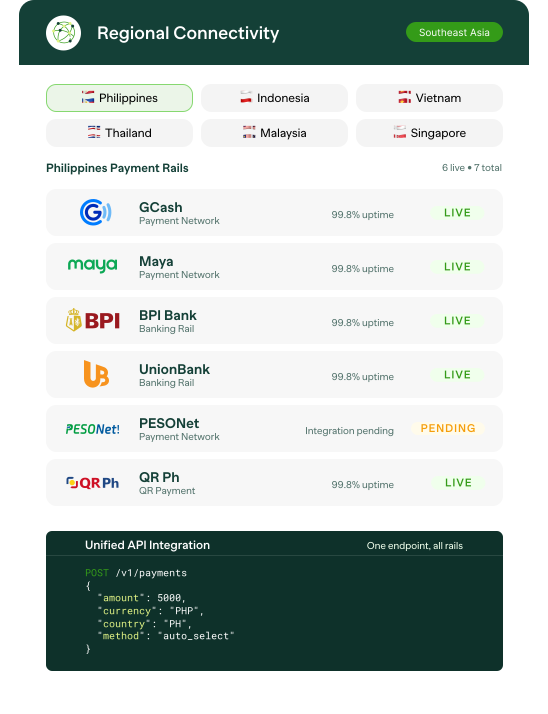
Platforms can accept payments through integrated payment rails such as QRPH and bank transfers. Funds are received into platform-controlled accounts or wallet balances.

Store Balances
Funds can be stored in programmable wallets assigned to users, merchants, or platform accounts. Wallet balances update automatically as transactions occur.
Move Money
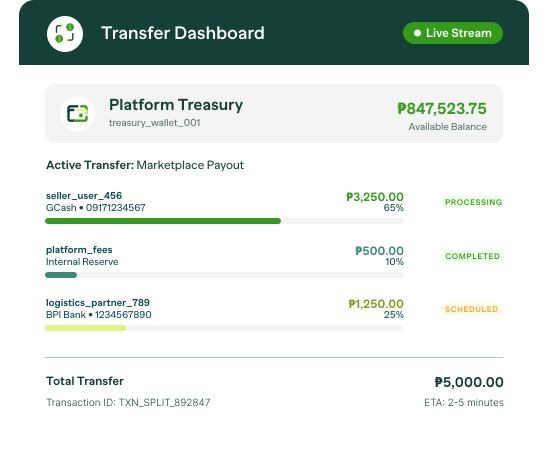
Platforms can transfer funds between wallets, distribute payouts, or send transfers to bank accounts. These transfers can be triggered manually or automated through workflows.
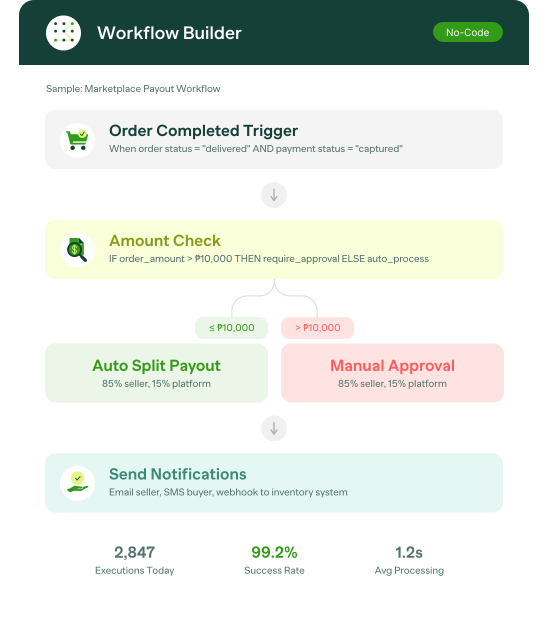
Automate Financial Flows
Developers can define automated financial logic such as marketplace payouts, revenue sharing, scheduled settlements, and disbursement flows.
Infrastructure designed for high-volume financial transactions
PayMongo infrastructure enables financial platforms to manage complex money movement flows while maintaining accurate transaction tracking and operational reliability.
Trusted by thousands of businesses across the Philippines





















PayMongo is BSP-regulated, PCI-DSS Level 1 certified, and protected by enterprise-grade security — so your customers' payment information stays safe on every transaction.