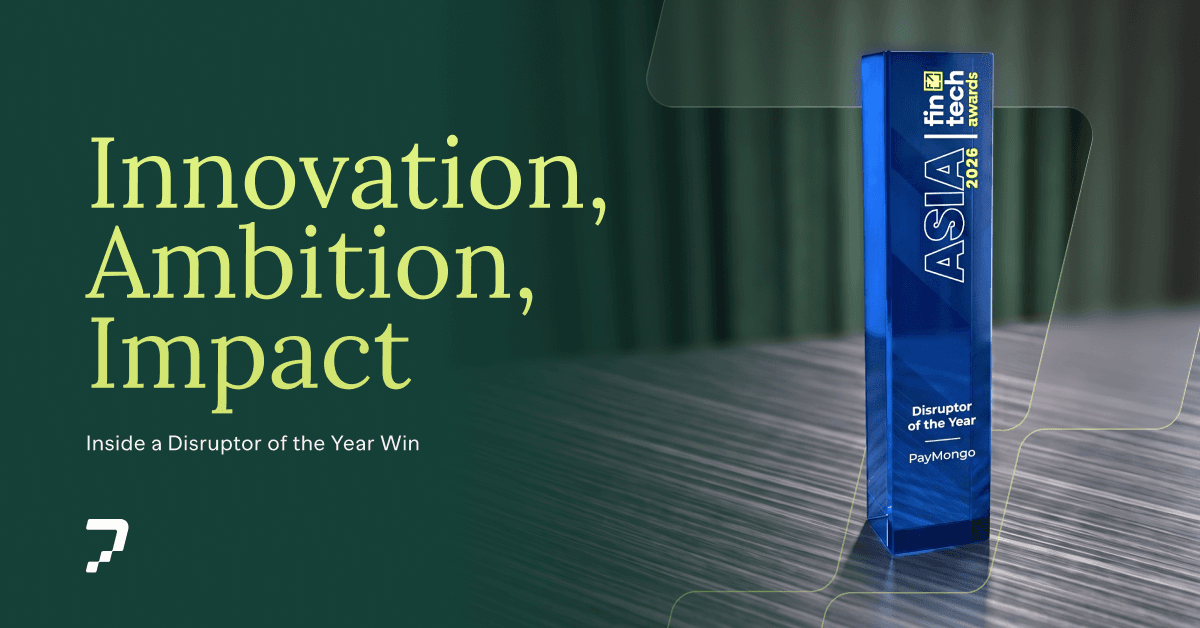
PayMongo was named Disruptor of the Year at the Asia FinTech Awards 2026, recognized for a "transformative approach, combining innovation, ambition and measurable impact," according to the organizers.
Three words. PayMongo's last three years map onto all of them.
Most disruption is a fight for market share. Ours wasn't. In the Philippines, the competition wasn't another company; it was the manual processes businesses kept operating on.
Before PayMongo, the tools to accept digital payments existed, but they weren’t always optimal for small businesses – weeks of bank onboarding, volume requirements, integrations that required a developer, or informal P2P transfers with fragmented records and manual tracking.
Most merchants got paid through workarounds — a personal wallet, an account number passed along in a message — not because it was ideal, but because real merchant infrastructure was priced and built for someone else.
PayMongo disrupted the idea that scalable payment infrastructure was only for enterprise players.
Within a year, merchant onboarding was compressed from four weeks to five minutes, and the nation’s most-used e-wallets, QR Ph, Buy-Now-Pay-Later, and card networks were all in one merchant account. PayMongo's own mid-year data backs it up: the merchant base grew 93% year-over-year — the clearest signal of how many more businesses are digitizing and scaling with PayMongo’s infrastructure.
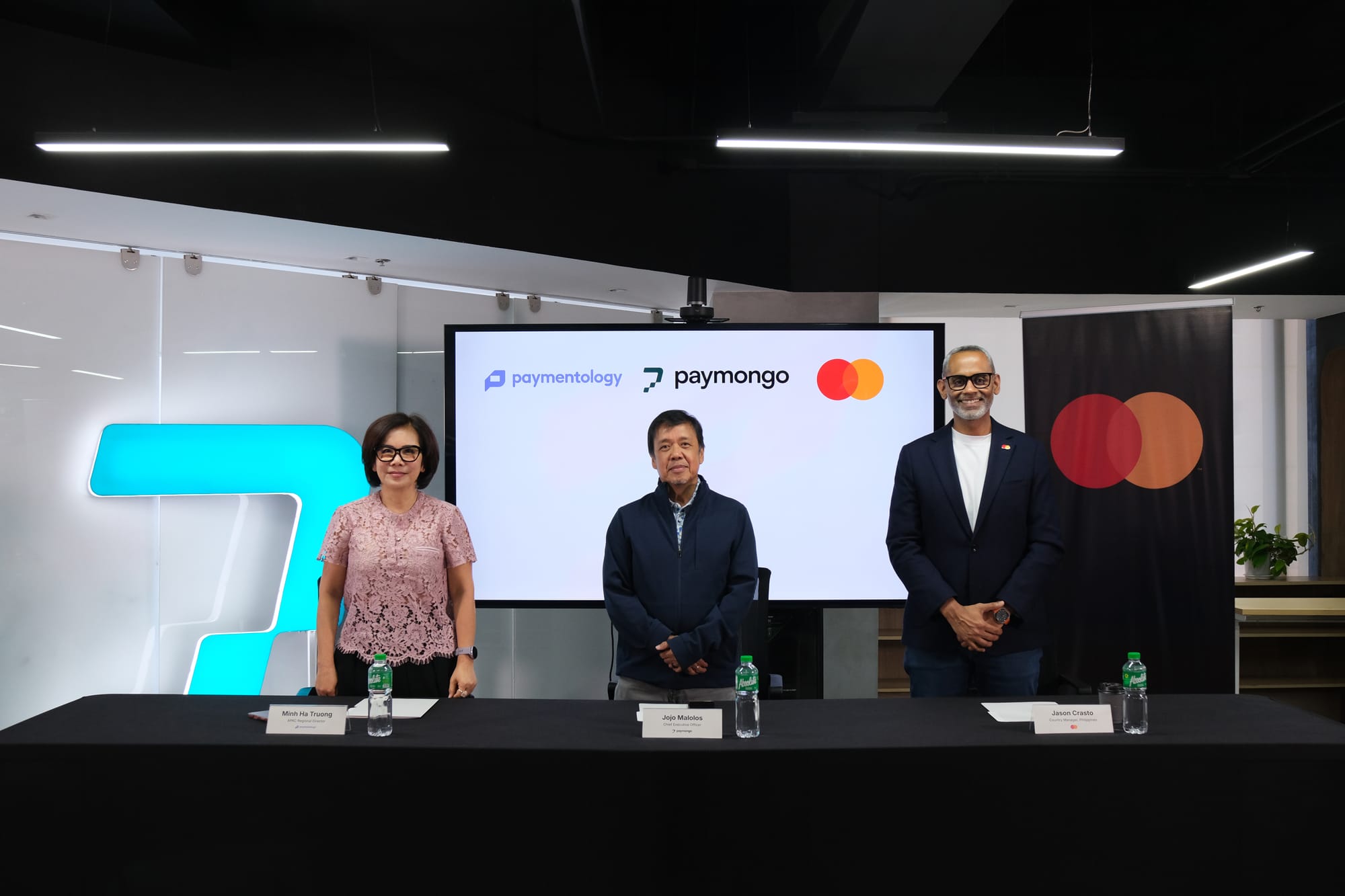
Building a disruptive infrastructure required more than just ambition. PayMongo backed that with execution: in June 2026, it launched a virtual business spending card for Philippine SMEs – with no bank account required to start transacting. It closes a gap most large enterprises never had to think about. Small businesses are a major driver of the Philippine economy, yet it has no access to the card infrastructure available to bigger businesses.
The gap-closing work took a team willing to act and make calls before the ground settled, quarter after quarter.
What's Next
Alongside driving merchant success, PayMongo continuously innovates its solutions to reshape fintech across Asia.
Winning Disruptor of the Year, CEO Jojo Malolos says, belongs to every colleague who "embraced and pursued the vision as their own."

The company reports it has been net income positive since November 2025 — growth funded by operations rather than capital investments. In a region where subsidized growth has been the norm for mid-stage startups, self-funded scale is what separates a real market shift from one built on venture capital.
PayMongo has one north star: merchant success. When merchants scale, PayMongo scales. Now, the company is asking the same question to its own network: how can modern payment infrastructure better support their business growth?
PayMongo is regulated by the Bangko Sentral ng Pilipinas.
.png&w=3840&q=75)