Move Money Globally. Settle Locally.
PayMongo connects USDT and USDC payments to Philippine banking rails — so your platform accepts stablecoin from anywhere and delivers funds to local bank accounts and payment networks.
PayMongo is BSP-regulated, PCI-DSS Level 1 certified, and protected by enterprise-grade security — so your customers' payment information stays safe on every transaction.



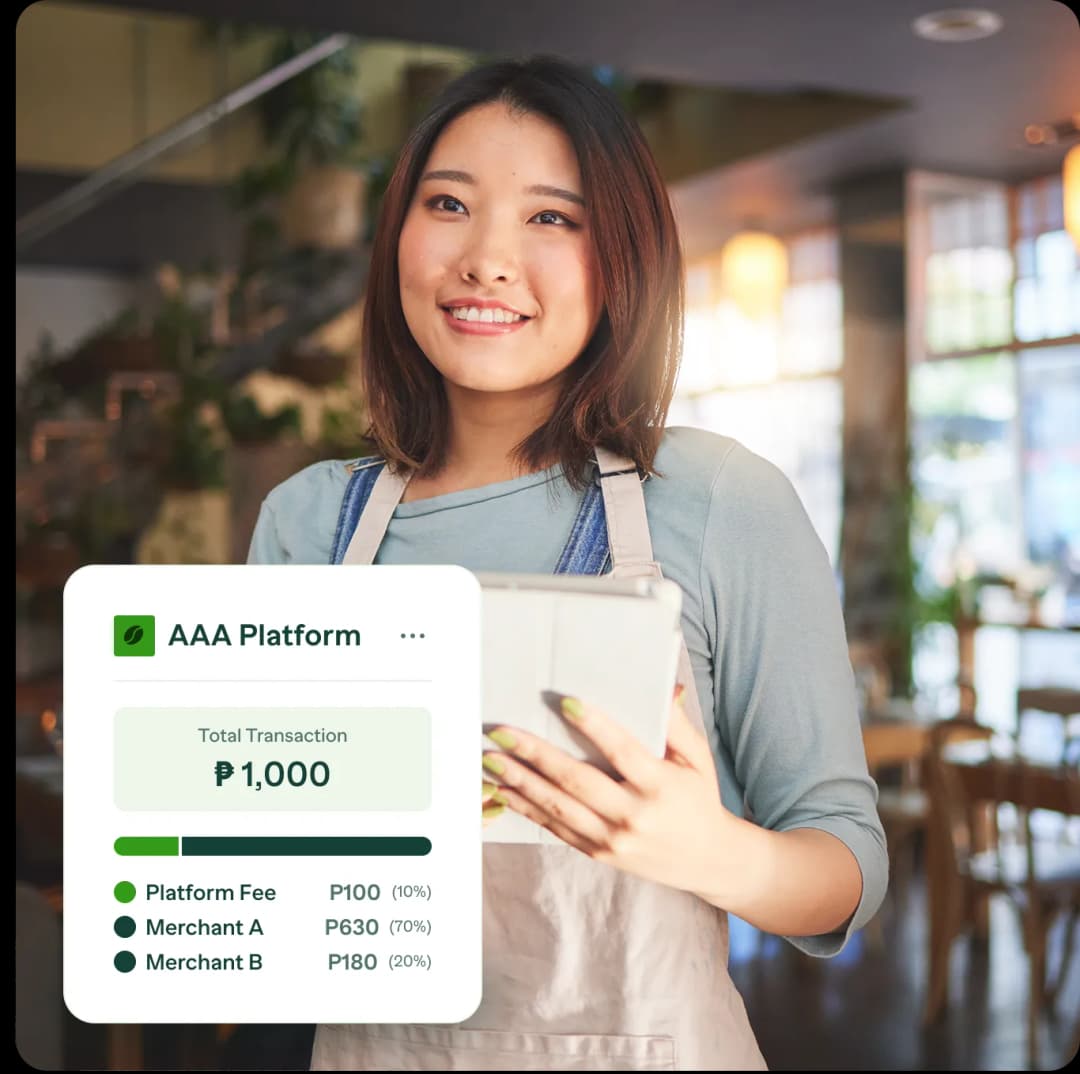
Why cross-border payments still break at the last mile
Traditional banking rails are too slow and too expensive for global payouts.
Wire transfers take 2–5 business days. Correspondent banking fees compound at volume. For remittance platforms and global marketplaces, every delayed payout is a customer lost to a faster competitor.
Stablecoins solve speed — but getting funds into local hands is a separate problem.
Your platform can receive USDT or USDC in seconds. Converting it to Philippine pesos and routing it to a local bank account or e-wallet still requires stitching together multiple liquidity providers, banking partners, and compliance layers — each with its own API and failure modes.
Running blockchain infrastructure and local financial systems in parallel doubles your operational complexity.
Two compliance frameworks. Two engineering integrations. Two reconciliation cycles. Every fintech building cross-border payments in Southeast Asia eventually hits this wall — and it slows every product decision that follows.
PayMongo collapses this into a single infrastructure layer — stablecoin in, Philippine pesos out, one integration.
One infrastructure layer for global in, local out
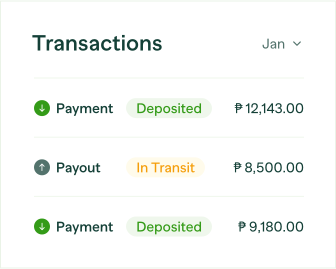
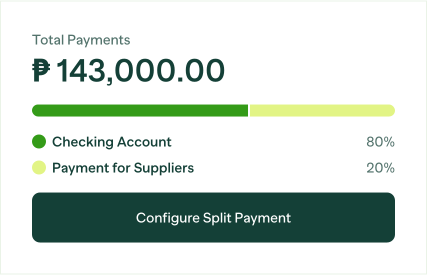
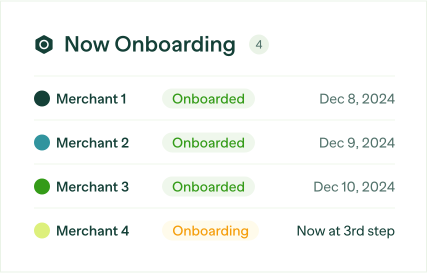
From stablecoin to local settlement in three steps

Receive stablecoin payments globally
Your platform accepts USDT or USDC from international senders via supported blockchain networks. Payments arrive directly into your PayMongo-connected infrastructure — no separate wallet setup required.

Convert to Philippine pesos
PayMongo routes received stablecoins through integrated liquidity providers for fiat conversion. No manual exchange accounts or separate conversion partner agreements — the conversion layer is built in.
Settle funds through local rails
Converted pesos are distributed to recipients through Philippine banking infrastructure — bank transfers and local payment networks. Recipients receive funds in their accounts, not in digital wallets.
Built for the scale that cross-border platforms demand
Infrastructure designed for high-volume financial platforms — not retrofitted from individual payment tools.
Connects global blockchain networks to real-world Philippine financial rails through a single API integration.
Programmable architecture built for fintech product teams who need control over every step of the money movement flow.