Like many great stories, this one starts with a dress.
Ina Cruz walked into a friend's house and saw Sam Villavicencio wearing Reformation — a brand that, in 2020, barely had a presence in the Philippines apart from the influencer community. Ina then asked if Sam would consider renting her collection out. Sam, who hadn’t considered this before, wondered if there was actual interest in the prospect.
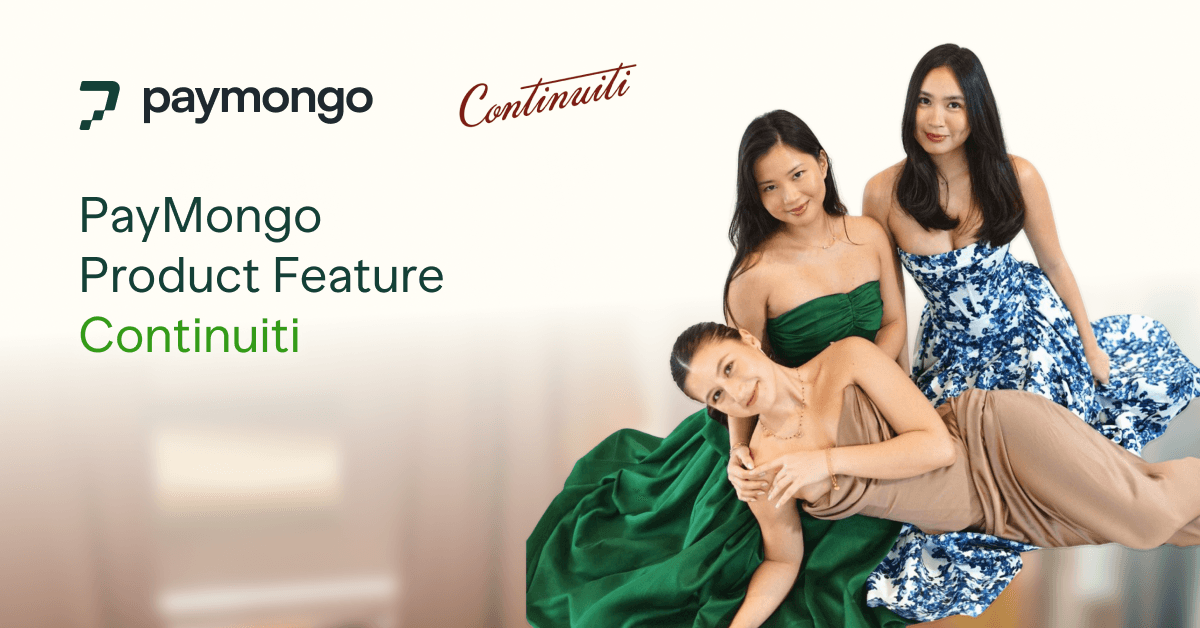
Continuiti was born from that exchange. What started as a mode of passive income became something bigger the moment Rocio Escaño was recruited into the founding team. Her response was immediate: dream bigger – this can be huge. Two years later, Continuiti has set itself up for that trajectory, dressing thousands of women across the metro.
Repositioning What "Renting" Means
The biggest obstacle wasn't capital or competition: it was perception.
In the Philippines, renting clothes carried a stigma. The unspoken question customers had wasn't about price or selection — why would I wear somebody else's clothes? Continuiti's founders knew that framing would sink the business before it started, so they clarified the narrative from the start.
"Our marketing was never about it being somebody else's clothes," Rocio explains. "It was about the new life you can give these pieces." Combined with the practical pitch, designer pieces at a fraction of retail cost, that reframe gave Continuiti room to grow.
Weddings remain the largest category, as they are for rental businesses globally. But Continuiti expanded early and deliberately: casual wear, destination and beachwear, even winter coats for women traveling abroad. The goal is to make renting feel like a normal way to dress for any occasion — accessible across price points and event types, not reserved for one expensive day.
Three Friends and a Business
Sam, Ina, and Rocio orbited each other before the business, but they didn't become genuinely close until they built something together.
That distinction matters to how they operate. "We know each other's strengths and we don't overlap," Rocio says. Ina leads creative, Rocio handles PR and people, and Sam runs finance and strategy. The lack of overlap means that while disagreements happen, there’s a clear understanding that it’s business — not personal.
"It's not always an echo chamber," Ina explains. "We don't just agree right away. We weigh out the options."
That structure — different lenses, shared trust, a common moral compass — has let three co-founders make decisions together for two years without the friction that often sinks founder relationships built on either too much familiarity or too little structure.
Trust extends beyond the three of them. Continuiti launched on a consignment model, borrowing pieces from friends willing to lend out their closets. That only works if lenders believe their clothes are safe and that they'll see a return. Trust, in other words, is the actual mechanism that Continuiti’s model runs on.
The Bottleneck
In the early months, Continuiti's checkout process was about as manual as it gets: customers sent payment via personal GCash, then a screenshot as proof, then waited for one of the three founders to manually confirm the order.
It worked when order volume was low. It stopped working almost immediately once it wasn't.
"We've been very blessed to have grown exponentially within our first year," Ina says. "Maybe four months in, we were already having trouble with our setup."
The bottleneck showed up everywhere: orders placed but never confirmed because a screenshot got lost in the shuffle, customers abandoning checkout because the payment process felt like a hassle, and — perhaps most damaging — founders spending sleepless nights manually reconciling payments, sometimes even catching fake screenshots submitted as proof of payment.
That's what led Continuiti to PayMongo.
Integrating A Unified System
The shift wasn't incremental — it restructured how Continuiti operated, online and in-studio.
On the website, checkout went from a multi-step manual process to a few clicks. No more hunting down GCash details, no more waiting on confirmation, no more broken purchase journeys.
"It's helped not just increase sales but improve the customer journey significantly," Sam says.
In-studio, the change was just as real. Previously, an employee had to physically stand with a customer at checkout, waiting for a manual payment to land, confirming it, photographing it, and sending it through the proper channel. With PayMongo handling that automatically, staff could manage multiple customers and tasks simultaneously instead of being tied up at a single register moment.
On the finance side, the dashboard gave Continuiti something they didn't have before: numbers they could actually trust. "Whatever cash is reflected there is really what we have and what we own," Sam explains. Before PayMongo, bank records and their manual tracking system frequently didn't match — a problem that ate time and made financial decision-making genuinely stressful for three first-time founders. With clean, accurate numbers, the conversation shifted from reconciling spreadsheets to actual strategy: how much inventory can we afford to buy, can we hire more people, where should we grow next.
Payouts to the friends who consign their clothes also became simpler — Continuiti essentially runs PayMongo as their operating bank account, as Ina puts it, handling both incoming customer payments and outgoing lender commissions through the same system.
Customer payment preference splits close to evenly between QR Ph and credit card, with QR Ph taking a slightly larger share. For closet sales, the team turned to PayMongo Pages, typing in item SKUs to process payments on the spot without the stress of manual order tracking.
To Be Continued
Continuiti's five-year vision is straightforward: more reach across the Philippines, more accessibility, and a long-term goal of making renting the default way people shop instead of a backup option.
"Our end goal has always been to make Continuiti synonymous with shopping," Rocio says.
The proof point is already showing up: at events, people compliment outfits and the answer isn't a brand name, it's just "Continuiti." That's the brand equity the founders are building toward at scale.
Sam's reflection on the PayMongo relationship sums up the broader philosophy: dressing up, feeling beautiful and confident, shouldn't be difficult. It should be easy and accessible. The tools that remove friction from the back end are part of how that promise gets kept on the front end, for every customer who rents from them.
Trust In Every Foundation
Continuiti's growth from three friends manually checking GCash screenshots to a commercial studio handling significant order volume is a trajectory PayMongo sees often: a business that scaled faster than its manual systems could keep up with, and needed financial infrastructure that could move at the same speed.
PayMongo gave Continuiti a checkout that converts instead of losing customers mid-purchase, payout automation that handles lender commissions without manual tracking, and dashboard accuracy that turned finance from a source of stress into a foundation for real decisions — what to stock, who to hire, where to expand.
For three young founders building a business model that didn't widely exist in the Philippine market, that infrastructure mattered as much as the product itself. PayMongo's role isn't just to process payments — it's to give founders like Sam, Ina, and Rocio the financial clarity to make confident decisions while they're busy building.
Continuiti is a PayMongo merchant based in the Philippines, offering designer clothing rentals for weddings, events, and everyday wear.